Walk through most homes and you can name every room instantly. Living room. Bedroom. Kitchen. Dining room. These labels are so ingrained that we often design spaces to fit the name rather than considering what we actually do in them. But what about those in-between spaces that resist categorization? The rooms that could be an office, a playroom, a gym, a studio, or something else entirely depending on the day or the season?
These undefined spaces represent a quiet revolution in how we think about home designs. They challenge the assumption that every square foot must have a predetermined purpose and a matching furniture set. Instead, they offer something increasingly valuable in our rapidly changing lives: flexibility.
The Tyranny of Single-Purpose Rooms
Traditional home designs operate on clear boundaries. The formal dining room exists for meals and nothing else, even if it’s only used three times a year. The guest bedroom sits empty most of the time, a shrine to potential visitors. The home office is strictly for work, creating a weird tension when you want to do something creative there on weekends.
This rigid categorization made sense when homes were designed for specific, predictable lifestyles. But modern life rarely follows such neat patterns. We work from home sometimes. Hobbies evolve. Children grow and their needs change. Extended family members move in temporarily. The pandemic revealed just how inadequate our named rooms were for the reality of how we actually live.
The Space That Shifts
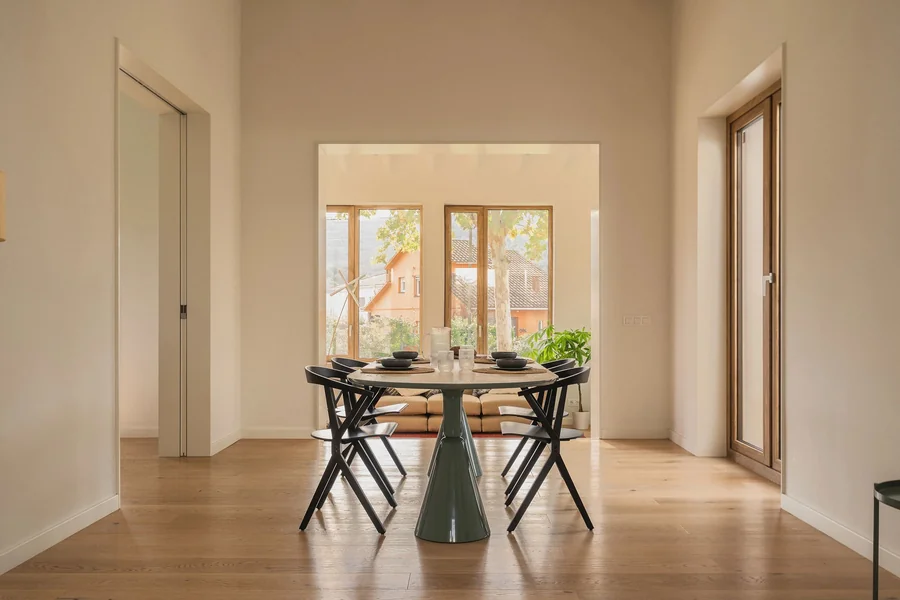
Imagine a room with good natural light, durable flooring, and minimal built-in features. No label on the door. No predetermined furniture layout. This room could be morning yoga space and afternoon art studio. It could be a dedicated workspace during the week and transform into a game room on weekends. It might serve as a temporary guest room when family visits, then return to being whatever you need it to be.
This isn’t about indecision or poor planning. It’s about intentional ambiguity. By refusing to pin down exactly what a space is “for,” you preserve its ability to evolve with your life rather than constraining your life to fit your house’s predetermined categories.
Designing for Transformation
Creating a space that can shift between purposes requires different thinking than traditional room design. The goal isn’t to make a room look unfinished or temporary, but to build in adaptability at a fundamental level.
Infrastructure Over Decoration
Focus on the bones of the space. Good lighting with multiple sources and dimmers. Plenty of electrical outlets at various heights. Neutral but quality flooring that can handle different activities. Storage that’s flexible rather than custom-built for one specific use. These infrastructural elements support whatever the room becomes without dictating what it must be.
Furniture as Variables
Choose pieces that can serve multiple functions or be easily moved. A sturdy table can be for dining, working, crafting, or puzzles. Seating that’s comfortable but not so specialized that it only makes sense in one configuration. Avoid built-ins unless absolutely necessary, as they permanently commit the space to certain arrangements.
The Power of Emptiness
Western culture often struggles with empty space, feeling compelled to fill every corner. But in flexible rooms, emptiness is a feature, not a bug. Clear floor space means the room can accommodate a yoga mat, a play area, a temporary workspace, or whatever else life demands. Resist the urge to fill every wall with permanent fixtures.
The Economic Reality
Beyond lifestyle flexibility, unnamed rooms make economic sense. Housing costs keep rising while living situations become less predictable. The ability to repurpose a space means you can stay in a home longer as your needs change, rather than having to move because your current house’s room configuration no longer matches your life.
That undefined space might be a nursery, then a toddler playroom, then a homework station, then a guest room when an aging parent needs to stay with you, then a hobby studio in your retirement. One room, multiple chapters of life. This adaptability represents significant value that rigid, named rooms cannot offer.
Living in the Question
There’s something liberating about walking into a room and asking “What is this today?” rather than having the answer predetermined. It keeps your relationship with your home dynamic and responsive. You’re not locked into decisions made years ago when your life was different.
This approach isn’t for everyone. Some people find comfort in clearly defined spaces with specific purposes. But for those who value flexibility, who anticipate change, or who simply want their homes to support rather than dictate their lifestyles, the room that refuses to be named offers something precious: possibility.
The next time you encounter a space that doesn’t fit conventional categories, don’t rush to label it. Don’t immediately decide it must be an office or a gym or a craft room. Let it exist in potential for a while. See what emerges from that openness. You might discover that the most valuable room in your home is the one that never got a nameplate on the door.