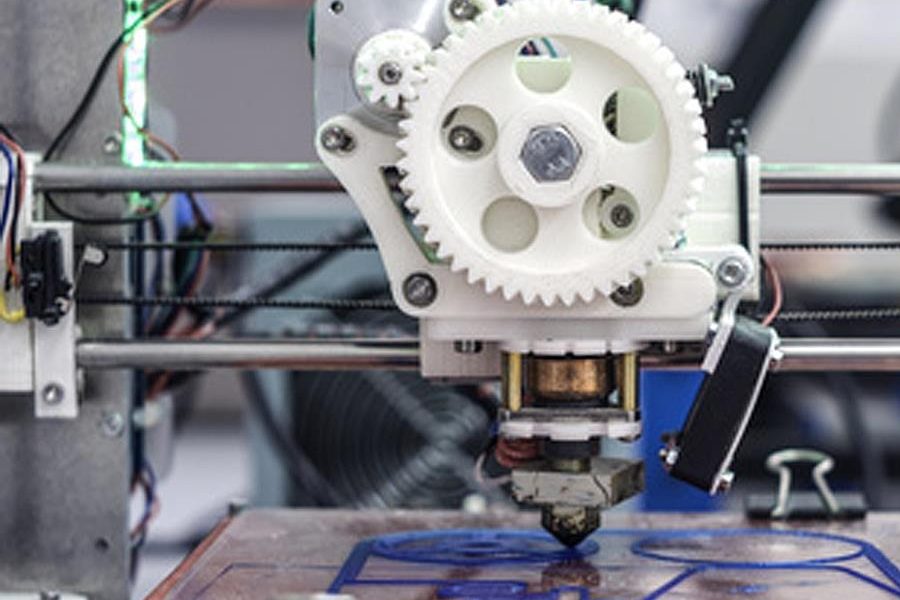
Since the last few years, additive manufacturing or 3D printing has become the revolutionary technology in the world of manufacturing. In contrast to a traditional manufacturing process, which may use the removal of material in a block, 3D printing forms objects by adding material layer by layer based on digital representation, creating entirely new degrees of flexibility, rapidity and personalization.
The article dwells on the topic of 3D printing transforming the manufacturing industry, its advantages, uses, and limitations in addition to its future objectives and opportunities.
Understanding 3D Printing in Manufacturing
3D printing creates physical objects by depositing material—such as plastic, metal, or resin—in precise layers according to a digital blueprint. This process allows for complex geometries and designs that are difficult or impossible to achieve with conventional methods. For those interested in further exploring this topic, geography4u.com offers valuable insights and information.
Advancements in materials, printers, and software have expanded 3D printing from prototyping to full-scale production across various industries.
Key Ways 3D Printing Is Transforming Manufacturing
- Accelerating Prototyping and Product Development
- Traditional prototyping can be time-consuming and costly.
- 3D printing enables rapid prototyping, allowing designers to quickly create, test, and iterate models.
- Faster development cycles lead to reduced time-to-market and improved innovation.
- Enabling Mass Customization
- Additive manufacturing makes producing customized or small-batch products economically viable.
- Industries like healthcare use 3D printing for patient-specific implants and prosthetics.
- Consumer products can be tailored to individual preferences without retooling costs.
- Reducing Waste and Enhancing Sustainability
- Traditional subtractive methods generate significant material waste.
- 3D printing uses only the necessary material, minimizing scrap.
- This efficiency supports sustainability goals and cost savings.
- Simplifying Complex Designs
- Complex internal structures, lightweight lattices, and integrated components are achievable with 3D printing.
- This capability enables performance improvements in aerospace, automotive, and medical devices.
- Streamlining Supply Chains
- On-demand production reduces the need for large inventories and warehousing.
- Localized manufacturing near end-users shortens supply chains and lowers transportation emissions.
- Spare parts can be printed as needed, extending product lifecycles.
- Facilitating Innovation in Materials
- Development of new printable materials like composites, metals, and bio-inks expands application possibilities.
- Custom material properties can be designed for specific functions.
Industry Applications Driving the 3D Printing Revolution
Aerospace and Defense
- Lightweight, durable components improve fuel efficiency.
- Rapid production of complex parts reduces downtime.
- Prototyping of new designs accelerates R&D.
Healthcare and Medical Devices
- Customized implants, surgical tools, and dental prosthetics enhance patient outcomes.
- Bioprinting research aims to create tissues and organs.
Automotive
- Rapid prototyping for design validation.
- Production of specialized or low-volume parts.
- Tooling and fixtures manufactured in-house.
Consumer Goods and Fashion
- Personalized products like footwear and jewelry.
- Small-batch manufacturing supports niche markets.
Industrial Manufacturing
- Creation of tooling, molds, and replacement parts.
- Reduction in lead times and costs.
Challenges in Adopting 3D Printing
Cost of Equipment and Materials
- High-quality industrial printers and materials require significant investment.
- Ongoing maintenance and material costs can be substantial.
Quality Control and Standardization
- Ensuring consistent mechanical properties and surface finishes is complex.
- Industry standards for 3D printed parts are still evolving.
Design and Skill Requirements
- Designing for additive manufacturing requires specialized knowledge.
- Workforce training is essential for effective adoption.
Speed Limitations for Large-Scale Production
- While ideal for small runs, 3D printing may be slower than traditional methods for mass production.
Intellectual Property Concerns
- Digital files can be easily copied or altered, raising IP protection issues.
Future Prospects and Innovations
- Hybrid Manufacturing: Combining additive and subtractive techniques for optimal results.
- Automation and AI: Enhancing print accuracy, speed, and material usage.
- Multi-Material Printing: Creating parts with varied properties in a single build.
- Sustainable Materials: Biodegradable and recycled feedstocks.
- Decentralized Manufacturing: Distributed production hubs empowered by 3D printing.
Additive manufacturing is transforming the way that things are made by achieving a higher-speed, more adaptable and more sustainable way in which things are produced. Although obstacles and issues persist, the current technological developments and the increasing use in the industries indicate a promising future in which additive manufacturing will be part and parcel of innovation and competitiveness.