Waiting is normally torture. Standing in line at the DMV feels like an eternity. Waiting for a table at a restaurant tests your patience. Yet somehow, waiting at a food truck feels different. Fifteen minutes passes, and you barely notice. What’s happening during those minutes that transforms waiting from an annoyance into something almost pleasant?
The Visible Kitchen Effect
When you wait at a restaurant, you’re waiting in ignorance. Your food is being prepared somewhere behind closed doors. You have no idea if the chef has even started making it. You’re suspended in uncertainty, and this uncertainty makes time crawl.
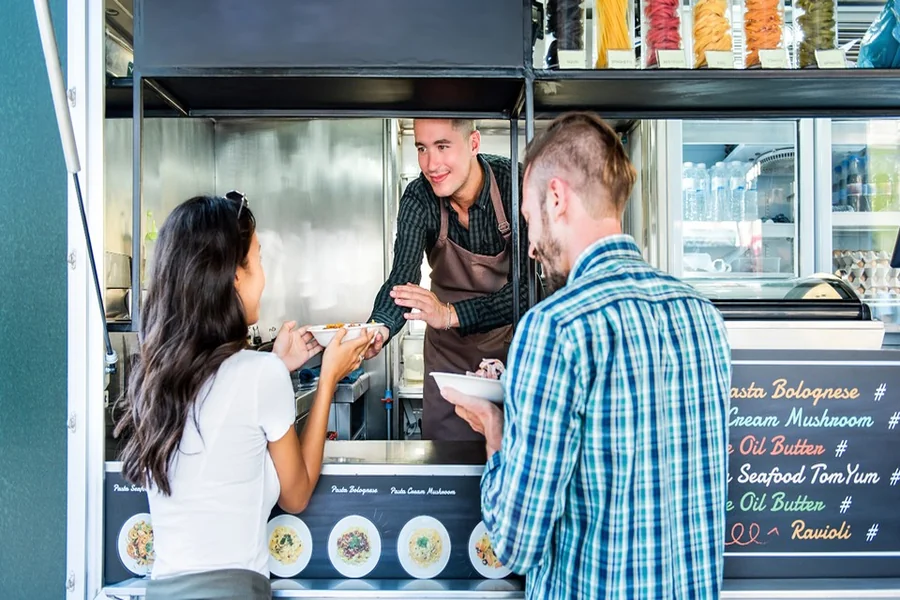
At a food truck, the kitchen is right there. You can watch your food being prepared. You see the cook grab ingredients, hear them hit the grill, watch the assembly process unfold. This visibility creates a completely different temporal experience.
Your brain isn’t wondering what’s happening. It’s engaged in watching what’s happening. Each step of the preparation gives you a small sense of progress. The waiting stops feeling like dead time and starts feeling like active observation. You’re not killing time. You’re watching a small performance.
This transparency also manages expectations. You can see how many orders are ahead of yours. You understand why things take the time they take. There’s no mystery, no frustration with invisible delays. The cooking process becomes entertainment rather than an obstacle between you and your meal.
The Social Time Buffer
Waiting at a food truck is rarely solitary. You’re surrounded by other people in the same situation, and this creates opportunities for casual social interaction that reshape your experience of time.
Someone might comment on how good the food smells. You might chat about what you’re ordering. A stranger might ask if you’ve been here before. These micro-conversations don’t require commitment or deep engagement, but they punctuate the waiting with human connection.
These brief social moments have a remarkable effect on time perception. Psychological research shows that time passes faster when we’re engaged with others, even in superficial ways. The waiting period fragments into these small interactions rather than feeling like one long stretch of inactivity.
Even without direct conversation, there’s a communal quality to food truck waiting. You’re all in it together, part of a temporary community united by appetite and anticipation. This shared experience makes the time feel less like waiting and more like participating in something collective.
The Anticipation Factor
Not all waiting is created equal. Waiting for something you dread feels interminable. Waiting for something you’re excited about passes more quickly. Food truck waiting falls firmly into the latter category, and the anticipation actually enhances rather than diminishes the experience.
The smell of cooking food builds anticipation with every passing moment. Your hunger increases, but not uncomfortably. It’s a pleasant, building excitement. You’ve committed to this choice, and now you get to look forward to it. The waiting becomes part of the reward rather than a delay of it.
Food trucks in Melbourne have mastered the art of managing this anticipation. The open kitchen design, the aromatic cooking processes, even the sound design of sizzling ingredients all contribute to building excitement. By the time your food arrives, you’re primed to enjoy it.
The Outdoor Effect
Most food truck waiting happens outdoors, and this environmental factor significantly impacts time perception. Indoor waiting often feels claustrophobic and disconnected. You’re in a controlled, static environment where nothing changes except the clock.
Outside, there’s constant stimulation. People walk by. Weather happens. Light changes. Birds or street sounds provide a ambient soundtrack. Your attention can drift to these environmental elements, breaking up the waiting time into varied moments rather than one uniform experience.
The outdoor setting also creates a sense of event rather than routine. You’re not just getting food. You’re having an experience outside, in the world, connected to the environment. This framing makes the entire process feel more special and less mundane.
The Active Participation
Waiting at a food truck involves a degree of active participation that restaurant waiting doesn’t. You choose where to stand. You might shift positions to get a better view of the menu or the kitchen. You decide whether to chat with other customers or keep to yourself. You remain engaged and making small decisions.
This active quality prevents the passive boredom that makes time drag. You’re not simply enduring the wait. You’re navigating it, managing it, participating in the process. Your brain stays occupied with these small tasks and choices, and occupied time passes faster.
The Meditation of Waiting
There’s an almost meditative quality to food truck waiting when you lean into it rather than resist it. You’re standing, breathing fresh air, smelling good food, watching people, existing in the present moment. It’s a pause in your day, a break from rushing, a moment to simply be.
In our hyperconnected, always-busy culture, these moments of structured waiting might be more valuable than we realize. They force us to slow down without feeling like we’re wasting time. We have a purpose for standing there, but that purpose requires patience.
The food truck wait teaches a subtle lesson about time itself. Not all waiting is dead time. Sometimes the waiting is the point.