
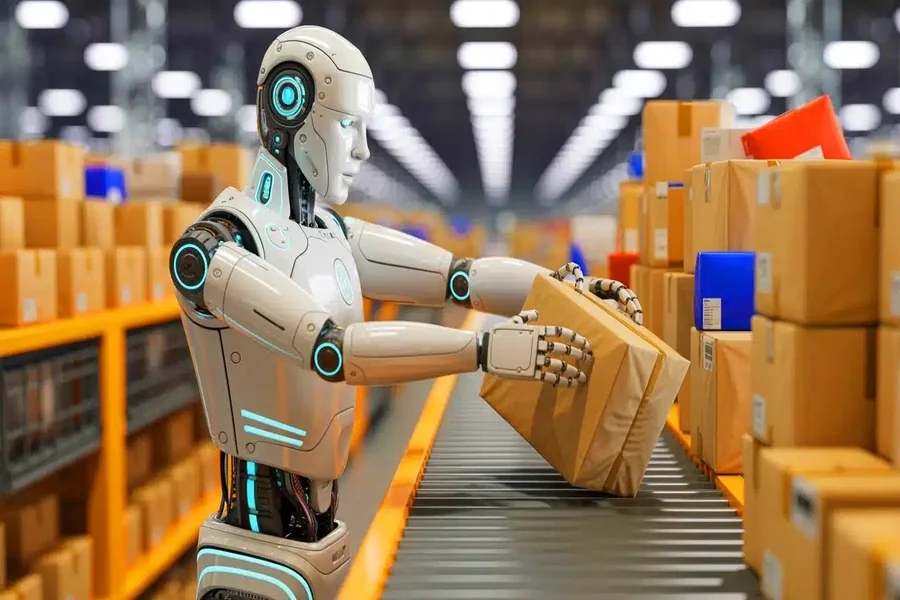
Every second, invisible negotiations are happening across Amazon’s marketplace. These aren’t the deliberate, strategic conversations that humans imagine when they think of business negotiations. They’re algorithmic exchanges happening faster than thought, where your Amazon repricer speaks a language of numbers, rules, and responses that determine who wins the most valuable real estate on the internet: the Buy Box.
The Algorithm as Counterparty
The Buy Box algorithm is your repricer’s primary negotiating partner, though it never speaks directly. Instead, your repricer submits offers through price adjustments and waits for the algorithm’s verdict. Will you win the featured position? Will you be relegated to the “other sellers” list? The answer comes in milliseconds, and the conversation continues.
This is negotiation without words, compromise without discussion. Your repricer proposes a price point. The algorithm considers your offer against dozens of factors: your seller rating, fulfillment method, shipping time, inventory levels, historical performance, and yes, your price relative to competitors. The algorithm responds with a decision, and your repricer immediately formulates its next move.
The Multi-Party Bargaining Table
The conversation isn’t bilateral; it’s a complex, multi-party negotiation. Your repricer is simultaneously negotiating with the algorithm and indirectly negotiating with competitors’ repricers. Each price adjustment sends signals that competitors’ systems detect and respond to.
When your repricer lowers your price by five cents, competitor repricers notice within seconds. Some are programmed to match immediately. Others are configured to undercut by a cent. Still others might hold position, confident their superior metrics will maintain Buy Box share despite the price disadvantage.
These automated responses create a negotiation dance where no human is directly involved, yet sophisticated strategic thinking is embedded in every move. Your repricer’s rules represent your negotiating position. Competitors’ repricers represent theirs. The conversation happens too fast for human intervention but too consequentially to ignore.
The Language of Competitive Signals
In human negotiations, we read body language, tone, and subtle cues. In algorithmic negotiations, these cues are embedded in pricing patterns and timing. A competitor who responds instantly to every price change is signaling aggressive intent to hold market position. A competitor who adjusts slowly or in large increments is signaling manual management or less sophisticated automation.
Your repricer can be programmed to recognize these patterns and adjust its negotiating strategy accordingly. Against aggressive automated competitors, it might adopt a patient approach, avoiding price wars by setting intelligent floors. Against manual competitors, it might take a more aggressive stance, capitalizing on their slower response times.
The Time-Based Negotiation Advantage
Human negotiations happen in meetings, over lunches, across days or weeks. Algorithmic negotiations happen in continuous time, with no breaks, no nights, no weekends. Your repricer is always at the negotiating table, always ready to respond, always monitoring for shifts in competitive positioning.
This creates an asymmetry in negotiations. Against competitors using manual repricing, your automated system is negotiating against someone who leaves the table for 16 hours a day. It’s like trying to negotiate a peace treaty when one side only shows up for brief periods and has no idea what happened while they were absent.
The Information Asymmetry Game
In traditional negotiations, information is power. The party with better information about the other side’s situation, constraints, and priorities has a significant advantage. In the Amazon marketplace, repricers create and exploit information asymmetries constantly.
An Amazon repricer processes vast amounts of data about competitor behavior, market trends, and historical patterns. It knows things about the competitive landscape that would take humans weeks to compile and analyze. When it adjusts your price, it’s doing so based on information that manual competitors simply don’t have access to in usable form.
This information advantage means your repricer is negotiating from a position of superior market intelligence. It knows when competitors typically go out of stock. It knows which competitors respond aggressively to price changes and which don’t. It knows the historical price ranges for products and when prices typically peak or trough.
The Game Theory Equilibrium
Ultimately, algorithmic repricing negotiations tend toward game theory equilibria. When multiple rational, well-configured repricers are negotiating with each other, they eventually find stable price points where no one benefits from further adjustment.
These equilibria represent efficient market outcomes. Prices settle at levels where all participants can profitably coexist, with Buy Box share distributed based on seller quality metrics rather than just price. The constant negotiation between repricers maintains these equilibria by immediately countering disruptive moves.
The Human Element in Robot Conversations
Despite all this automation, humans remain essential to these negotiations. We set the rules, define the constraints, and determine the strategic objectives. The repricer is our representative at the negotiating table, executing our strategy with superhuman speed and consistency.
The most successful sellers understand that they’re not replacing human judgment with automation; they’re scaling and accelerating it. We provide the strategic thinking, and the repricer provides the tactical execution. Together, they create negotiating outcomes that neither could achieve alone.